This is one of the least-discussed topics in Malaysian culture, yet one of the most difficult for women going through it. We’ll discuss it clinically, honestly, and without shame.
What is genitourinary syndrome of menopause
Genitourinary syndrome of menopause (GSM) is the clinical term encompassing:
- Vaginal dryness
- Burning and irritation
- Painful intercourse (dyspareunia)
- Frequent urination and recurrent urinary tract infection
- Urinary incontinence
It affects >50% of postmenopausal women. Yet only a minority get treatment - many don’t know it can be treated.
Why it happens
Estrogen keeps vaginal tissue thick, elastic, and lubricated. When estrogen drops:
- Tissue becomes thin (atrophy)
- pH shifts from acidic (3.8-4.5) to neutral (5.5+)
- Vaginal microbiome disrupted
- Blood flow decreases
- Lubrication drops significantly
This is progressive - usually starts in late perimenopause and worsens in postmenopause.
Solutions: 3 layers
Layer 1: vaginal moisturiser (routine)
Different from lubricant. Moisturiser is used every 2-3 days routinely (not just before intimacy). Restores tissue hydration over time.
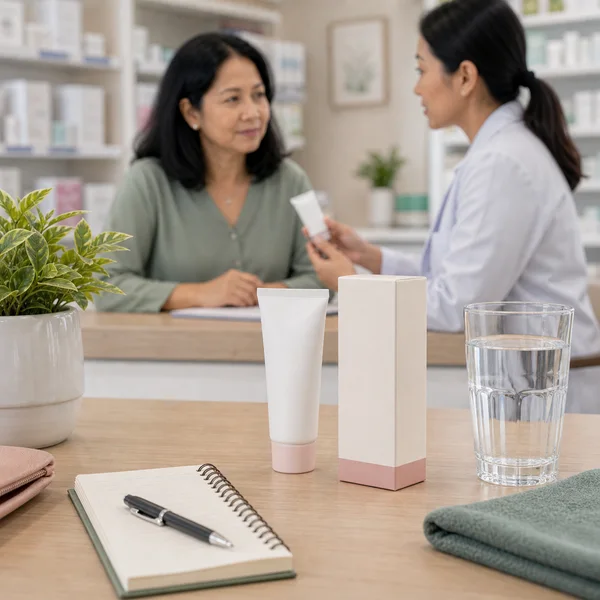
Replens
Replens MD Vaginal Moisturizer
Suitable for: Most-studied over-the-counter option for tissue hydration
View price on ShopeeShopee affiliate linkCategory image. Check the seller, label, halal status and expiry before buying.Effective ingredients:
- Hyaluronic acid (HA) - molecule that holds 1000 times its weight in water
- Polycarbophil (Replens MD) - long-lasting
- Lactobacillus in some products - supports microbiome
Layer 2: lubricant (during intimacy)
Different purpose. Lubricant is for sex only - moisturiser doesn’t replace it.
Types:
- Water-based - most common, condom-safe
- Silicone-based - longer-lasting, not for silicone toys
- Hyaluronic acid-based - can serve both functions
Avoid:
- Petroleum jelly (Vaseline) - can cause infection
- Oils (coconut, olive) with latex condoms - degrade condoms
- High-glycerin products - can increase yeast infection risk
Layer 3: clinical treatment
When moisturiser and lubricant aren’t enough:
Local vaginal estrogen
A low-dose local option may help some women with genitourinary symptoms, but suitability still needs clinician review, especially with cancer history or unexplained bleeding.
Forms available:
- Vaginal cream (Premarin, Estriol) - used 2 to 3 times weekly
- Vaginal tablet (Vagifem) - applicator-inserted twice weekly
- Vaginal ring (Estring) - replaced every 3 months
Rahn et al. 2014 shows local vaginal estrogen may be effective for selected patients with minimal systemic absorption. Safe for:
- Women for whom systemic hormone replacement therapy isn’t suitable
- Many women with breast cancer history (discuss with oncologist)
- Women preferring local effect without systemic hormones
Important: most women need continuous treatment - effects fade if stopped.
Hyaluronic acid vaginal gel
Hormone-free alternative. Effective for women where estrogen isn’t an option. Available at select pharmacies in Malaysia.
DHEA vaginal (Intrarosa)
Newer, not widely available in Malaysia. DHEA converted by vaginal tissue to local estrogen and testosterone.
Laser vaginal therapy
Highly marketed but evidence still debated. North American Menopause Society 2022 doesn’t endorse as routine treatment. Expensive (confirm the cost of a treatment series with the clinic) and long-term effects unclear.
Libido drop
More complex than dryness because it involves:
Physical factors
- Dryness and dyspareunia (pain reduces interest)
- Chronic fatigue
- Hot flashes and disrupted sleep
- Joint pain
Hormonal factors
- Low estrogen
- Slow testosterone decline (real but gradual)
Emotional/relational
- Mood swings and depression
- Work and family stress
- Relationship dynamics
- Body image and confidence
Solutions
Physical factors: treat dryness first (above). Many women find libido returns once intimacy isn’t painful.
Hormonal: hormone replacement therapy can help some women. Low-dose testosterone (off-label in Malaysia per UK guidelines) for women with low libido not addressed by estrogen alone.
Emotional: couples therapy, individual therapy, mood support. Some selective serotonin reuptake inhibitor antidepressants can lower libido as side effect - discuss alternatives with doctor.
Communication with partner
Challenge: Malaysian culture doesn’t encourage open discussion of sex in marriage. Approaches that work:
Pick a calm time - not during/after a difficult intimate moment. A regular weekday, outside the bedroom.
Explain the biology - “menopause changes how my body responds. This isn’t because I don’t love you.”
Together - involve your partner in treatment decisions. Joint clinic visits help for major decisions.
Variety - focus on intimacy and connection, not just sex. Touch, conversation, time together without screens.
Get support - marriage counsellor or sex therapist if conflict persists. Ministry of Health Malaysia clinics have specialists in some districts.
When to see an obstetrics and gynaecology specialist
- Severe pain during intercourse
- Bleeding after intercourse (need exam to rule out cancer)
- Recurrent urinary tract infection (3+ per year)
- Urinary incontinence affecting daily life
- No relief with moisturiser and lubricant after 6 weeks
See Malaysia Menopause Clinic Directory.
What to remember
Genitourinary syndrome of menopause isn’t “just part of ageing you have to accept”. It’s a medical symptom with effective treatment. Dryness, pain, and recurrent urinary tract infection aren’t normal - you deserve treatment that helps.
Related guides: